
Use case
Healthcare capacity & clinical ops
Capacity you can see before it breaks
Staffing, credentialing, and supply signals coordinated for patient service levels.


Clinical operations need forecasts that respect real-world constraints—not spreadsheet optimism.
The Challenge
Credentialing delays, float pool fragmentation, and supply shortages show up as last-minute chaos. Leaders lack an integrated view tying census, acuity, and staffing rules to actionable schedules.
The Innovoco Solution
We integrate EHR, workforce, and supply signals with policy-aware recommendations. Humans approve schedule changes and high-risk substitutions; the system tracks rationale for retrospective review.

Phase 1 — Data alignment
Harmonize roles, units, and contracts; validate data latency and gaps with operations.
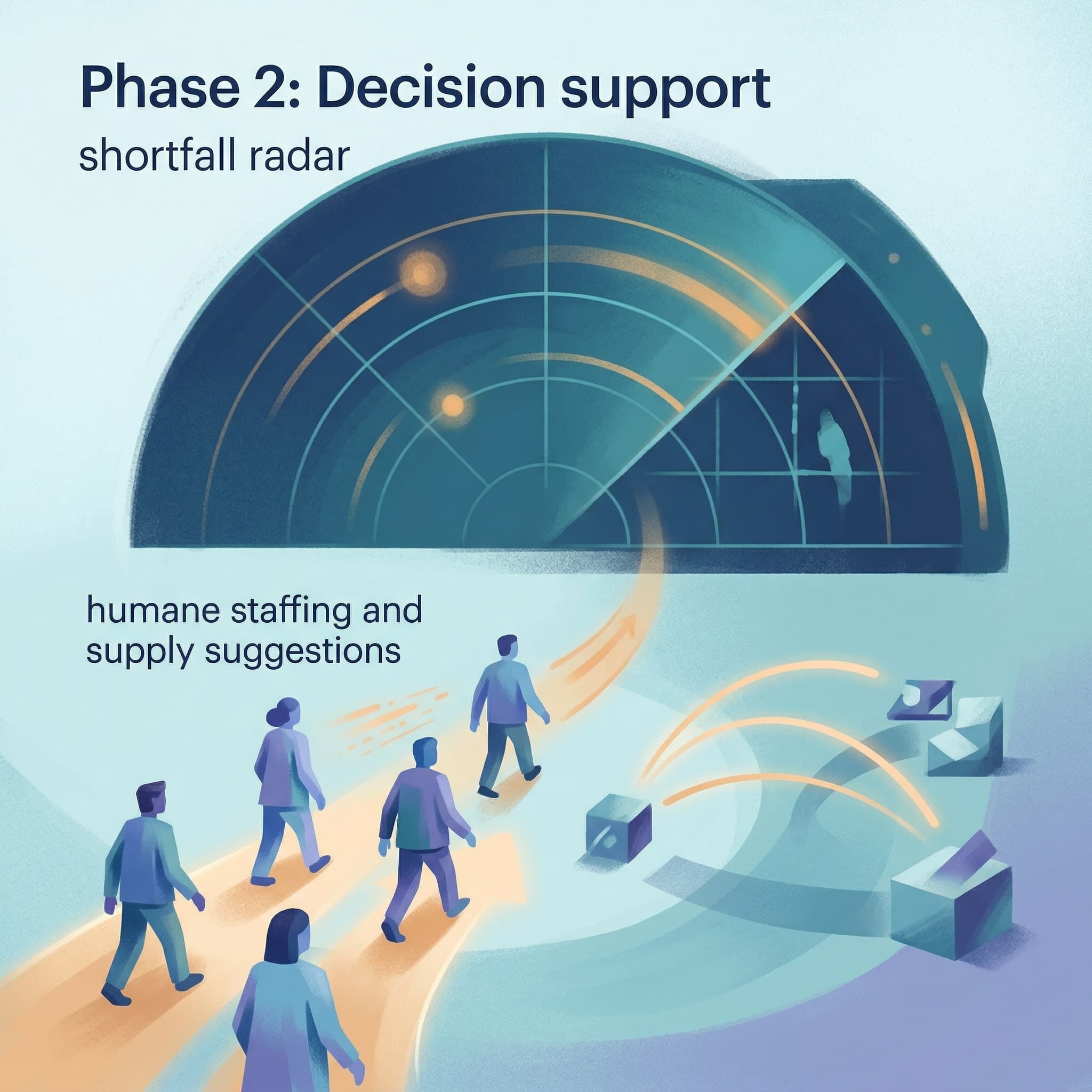
Phase 2 — Decision support
Surface shortfalls early; recommend shifts, locum triggers, and supply orders within governance.

Key implementations
Credential-aware staffing
Never propose assignments that violate scope or expirations.
Census & acuity models
Blend historical demand with live feeds for surge planning.
Supply risk alerts
Early warning on SKUs tied to high-acuity procedures.
Command center views
Role-specific dashboards for nursing, perfusion, and admin leads.
Audit-friendly logs
Who changed schedules, why, and which policy applied.
Technical Innovation
FHIR and workforce APIs feed a durable planning graph so retries and partial updates do not double-book or leave units uncovered.


Impact
- Reduced last-minute premium labor costs on pilot units.
- Improved adherence to internal staffing ratios and external reporting.
- Earlier detection of credentialing bottlenecks.
- Better alignment between clinical and materials management.
We see staffing and supply risk before service levels slip. Approvals stay human; the system keeps the rationale for review.
— Chief Nursing Officer (anonymized)

Explore this outcome on your stack
We map scope, guardrails, and rollout to your data boundaries and teams—practical next steps, not a generic slide deck.
60 min · Free · No obligation
More case studies
Explore adjacent patterns from the same production playbook.